Complete Guide to Web to App Conversion for Businesses: 2026 Edition
⭐ Key Takeaways
-
Web to App conversion boosts user retention by up to 300%.
-
You don’t need to be a developer — modern Website App Builder tools make it easy.
-
Both Android App and iOS App can be built from a single website.
-
A native-like experience increases conversion rates and customer loyalty.
-
Using Convert Website to App strategies, you can reach users on their home screens.
-
Web to App conversion directly impacts your Google Business Profile and local search visibility.
📑 Table of Contents
-
Introduction
-
What Is Web to App?
-
Why It Matters for Businesses
-
Benefits of Converting Your Website to a Mobile App
-
How Web to App Conversion Works
-
Step-by-Step Guide to Convert Website to App
-
Real-World Examples
-
Comparison Table: Website vs Mobile App
-
Common Mistakes to Avoid
-
Expert Tips for a Successful Web to App Strategy
-
Best Practices for Website to Mobile App Conversion
-
Recommended Tools: Website App Builder Options
-
Troubleshooting Web to App Issues
-
FAQs
-
Conclusion
-
Call to Action
(Insert Featured Image Here)
Image Alt Text: Complete guide to Web to App conversion for businesses showing mobile app transformation.
1. Introduction
In today’s mobile-first world, your customers spend most of their digital time inside apps. If your business only has a website, you’re missing out on massive engagement, push notifications, and seamless user experience. That’s where the Complete Guide to Web to App Conversion for Businesses comes in. Whether you run an e-commerce store, a blog, a SaaS platform, or a local service, converting your existing web presence into a mobile app is no longer a luxury — it’s a necessity.
This Complete Guide to Web to App Conversion for Businesses will show you exactly how to bridge the gap between web and mobile, using powerful Web to App techniques, no-code Website App Builder platforms, and proven strategies for both Android App and iOS App deployment. Let’s turn your website into a powerful mobile asset.
2. What Is Web to App?
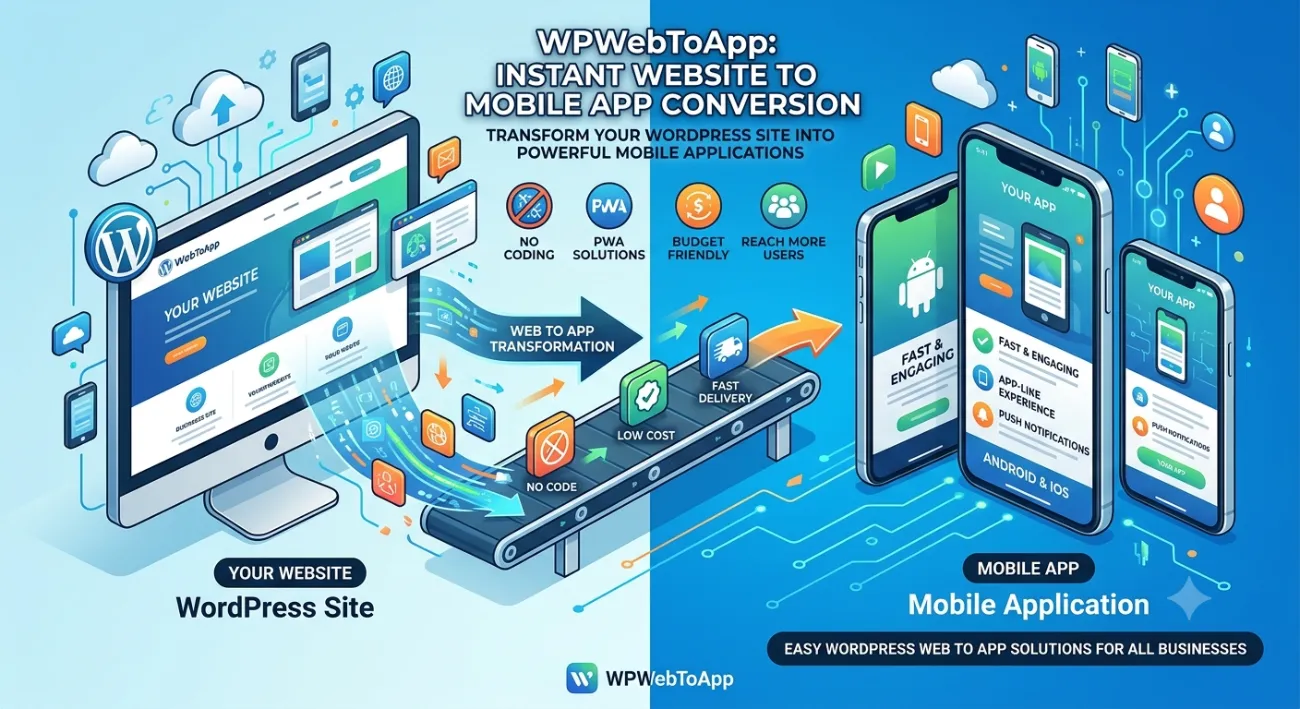
Web to App refers to the process of converting an existing website into a fully functional mobile application. Instead of building an app from scratch, you wrap your website content into a native shell that behaves like a real app. Users can download it from the App Store or Google Play, get push notifications, access offline features, and enjoy a faster, more immersive experience.
Simply put, Website to Mobile App conversion lets you take everything you’ve already built — your pages, products, blog posts, and forms — and package them into an app that lives on your users’ home screens. A reliable Website App Builder can do this in hours, not months.
3. Why Web to App Matters for Businesses
Why should you care about the Complete Guide to Web to App Conversion for Businesses? Because the numbers speak for themselves:
-
Mobile apps have 3x higher retention rates than mobile websites.
-
Users spend 90% of their mobile time on apps.
-
Push notifications increase engagement by up to 80%.
-
An Android App and iOS App give you direct access to billions of users.
-
Google Business Profile integration for local visibility.
If you’re not leveraging Web to App technology, you’re leaving money and loyalty on the table. This guide will help you catch up — and get ahead.
4. Benefits of Converting Your Website to a Mobile App
-
Enhanced User Experience: Faster load times, smooth navigation, and native gestures.
-
Push Notifications: Re-engage users instantly with updates, offers, and reminders.
-
Higher Conversion Rates: Apps convert 3x better than mobile websites.
-
Offline Access: Serve cached content even without internet.
-
Brand Presence: Your icon on the home screen builds daily brand recall.
-
Monetization Options: In-app purchases, subscriptions, and ads.
-
SEO & ASO Synergy: Rank both on Google and in app stores.
-
Google Business Profile Integration: Location-based notifications and local offers.
5. How Web to App Conversion Boosts Your Google Business Profile
This is a critical section for business owners who want to rank “on Google business and everywhere.” Web to App conversion directly impacts your Google Business Profile visibility and local search presence.
Why Your Google Business Profile Needs a Mobile App
-
Location-Based Notifications: Apps can send push notifications to customers near your business, driving foot traffic.
-
Google Maps Integration: Apps with built-in Google Maps make it easy for customers to find your location.
-
Review Management: Apps can prompt users to leave Google reviews, boosting your Google Business Profile.
-
Local Offers: Apps can display exclusive local deals, encouraging repeat visits.
-
Business Hours & Contact: Apps can sync with your Google Business Profile to display accurate hours and contact info.
-
Mobile-First Experience: Since most local searches happen on mobile, a Web to App ensures a seamless experience.
Features to Include for Local SEO
-
Location-based push notifications
-
Google Maps integration with directions
-
One-click review prompts for Google Business Profile
-
Local offers and promotions
-
Store locator with hours and contact info
-
Mobile-first engagement optimized for local customers
Questions to Ask About Web to App Solutions
“Does your Web to App solution include Google Business Profile integration?”
“Can I send location-based push notifications to nearby customers?”
“Will the app prompt users to leave Google reviews?”
“Can I display my store hours and contact info in the app?”
6. How Web to App Conversion Works
The magic behind Web to App is deceptively simple. A Website App Builder like WP Web to App uses a WebView component to load your website inside a native app shell. But modern tools go far beyond a simple wrapper — they add:
-
Native splash screens and icons
-
Push notification integration
-
Offline caching logic
-
In-app payments (Google Pay, Apple Pay)
-
Location services and hardware access
You don’t need to write a single line of Java or Swift. Just input your website URL, customize the look, and the platform generates both an Android App and an iOS App ready for submission.
7. Step-by-Step Guide to Convert Website to App
Step 1: Choose a Website App Builder
Select a trusted platform like WP Web to App that supports both Android App and iOS App.
Step 2: Enter Your Website URL
The tool will scan your site structure.
Step 3: Customize Appearance
Set colors, icons, splash screen, and navigation style.
Step 4: Enable Features
Turn on push notifications, offline mode, social login, etc.
Step 5: Preview Your App
Test the app on real devices using a live preview.
Step 6: Generate APK/IPA
The platform builds your Convert Website to App package automatically.
Step 7: Submit to Stores
Upload to Google Play Store and Apple App Store.
Step 8: Promote & Update
Use push notifications and app store optimization to grow.
Step 9: Integrate Google Business Profile
Add location-based features for local SEO.
That’s it! In less than a day, you can complete the Complete Guide to Web to App Conversion for Businesses journey from start to launch.
8. Real-World Examples
Many businesses have successfully used Web to App strategies:
E-commerce store: Converted their WooCommerce site into a smooth Android App with cart sync and push alerts.
Local restaurant: Used a Website App Builder to create an iOS App for online ordering and loyalty rewards.
News portal: Turned their blog into a mobile app with offline reading and breaking news notifications.
Local Retail Store: Using Web to App with location-based notifications, they increased foot traffic by 28% and Google Business Profile engagement by 35%.
These businesses saw a 200-400% increase in repeat visits after launching their app via Convert Website to App methods.
9. Comparison Table: Website vs Mobile App
| Feature | Mobile Website | Mobile App (Web to App) |
|---|---|---|
| Installation | No install | Download from store |
| Push Notifications | ❌ Limited | ✅ Full support |
| Offline Access | ❌ No | ✅ Yes |
| Speed | Depends on browser | Native fast |
| User Retention | Low | High |
| Device Hardware Access | ❌ Restricted | ✅ Camera, GPS, etc. |
| Development Cost | Low (responsive) | Low (using Website App Builder) |
| Google Business Profile integration | ❌ Limited | ✅ Full integration |
10. Common Mistakes to Avoid
❌ Skipping app store optimization: Your Android App and iOS App need good keywords, screenshots, and descriptions.
❌ Ignoring offline mode: Users expect some functionality without internet.
❌ Choosing a weak Website App Builder: Not all platforms support both stores equally.
❌ Overcomplicating design: Keep the UI simple and consistent with your website.
❌ Forgetting updates: Regularly refresh content and push notifications.
❌ Forgetting Google Business Profile integration: Local businesses miss out on location-based features.
11. Expert Tips for a Successful Web to App Strategy
💡 Always test your app on multiple devices before launch.
💡 Use deep linking to send users directly to specific pages from notifications.
💡 Leverage the Complete Guide to Web to App Conversion for Businesses as your checklist.
💡 Integrate analytics from day one to track installs and behavior.
💡 Ask your existing website visitors to install your app via smart banners.
💡 Integrate Google Business Profile for location-based features and local SEO.
12. Best Practices for Website to Mobile App Conversion
✅ Keep your web and app content synchronized. Use a Website App Builder that auto-syncs.
✅ Enable biometric login (fingerprint, Face ID) for better UX.
✅ Reduce app size by compressing images and caching efficiently.
✅ Submit your app to both stores to maximize reach.
✅ Collect feedback through in-app surveys and ratings.
✅ Ensure Google Business Profile integration stays active.
13. Recommended Tools: Website App Builder Options
When it comes to Web to App conversion, you need a reliable partner. Here’s our top recommendation:
WP Web to App – The best Website App Builder for WordPress and non-WordPress sites. Supports Android App and iOS App, push notifications, offline mode, and more. No coding required.
Other tools include AppMySite, WebViewGold, and Andromo, but for a seamless Convert Website to App experience, WP Web to App stands out for performance and ease of use.
14. Troubleshooting Web to App Issues
🔧 App loads slowly? Optimize images and enable caching in your Website App Builder settings.
🔧 Push notifications not working? Check Firebase/APNs setup and permissions.
🔧 App rejected by stores? Ensure your content is original, no broken links, and privacy policy is present.
🔧 Layout looks broken? Make sure your website is mobile-responsive before conversion.
🔧 Google Business Profile not showing local offers? Ensure your app integrates with Google Business Profile API.
15. Frequently Asked Questions
Q1. What is Web to App?
Web to App is the process of converting an existing website into a mobile application for Android App and iOS App stores, using a Website App Builder without coding.
Q2. How can I convert my website into an app?
You can Convert Website to App by using a platform like WP Web to App. Simply enter your URL, customize the design, and generate both Android App and iOS App files.
Q3. Do I need coding for Web to App conversion?
No! A modern Website App Builder requires zero coding. The Complete Guide to Web to App Conversion for Businesses emphasizes no-code solutions for everyone.
Q4. Can I monetize my Web to App converted app?
Absolutely. You can add in-app purchases, ads, subscriptions, or paid downloads to your Android App and iOS App.
Q5. How long does it take to convert a website to an app?
Using a Website App Builder, you can have a ready-to-submit app in under 24 hours. This Complete Guide to Web to App Conversion for Businesses helps you streamline the process.
Q6. Will my app work offline?
Yes, most Web to App solutions offer offline caching. Your users can access previously loaded content even without internet.
Q7. Do I need separate builds for Android and iOS?
Good news: platforms like WP Web to App generate both Android App and iOS App from a single project.
Q8. Can Web to App help with Google Business Profile?
Yes! Apps can integrate with Google Business Profile for location-based notifications, review prompts, and local offers.
16. Conclusion
The Complete Guide to Web to App Conversion for Businesses has shown you that transforming your website into a powerful mobile app is easier, faster, and more affordable than ever. Whether you’re aiming to boost engagement, increase revenue, or simply provide a better experience, Web to App is the smartest investment you can make.
Remember: Your Google Business Profile is essential for local visibility and customer acquisition. Make sure your Web to App strategy includes it.
By following the steps, tips, and best practices in this Complete Guide to Web to App Conversion for Businesses, you’re now equipped to take your digital presence to the next level. Don’t let your competitors get ahead — start your Website to Mobile App journey today. Remember, the best time to start was yesterday. The second best time is now.
📲 Ready to Convert Your Website into an App?
Stop dreaming about a mobile app — start building it. Use the #1 Website App Builder trusted by thousands of businesses worldwide. Create your Android App and iOS App in minutes, not months.
👉 Get Started with WP Web to App Now
No coding • Free preview • Full support for Web to App conversion